How to Stream and Record without Voice Audio in OBS

OBS is a powerful software for recording and streaming video content. While many users focus on incorporating voice commentary, there are times when you may wish to record or stream without any spoken audio. Fortunately, OBS allows you to customize your audio settings, making it suitable for silent instructions, professional presentations, or gaming highlights.
In this guide, we'll walk you through the step-by-step process of setting up streaming and recording in OBS without voice audio, we will also discuss how to separate audio sources for greater flexibility.
Part 1: How to Stream and Record Without a Microphone?
Why Should One Not Use a Microphone for Streaming?
There are many situations where streaming without a mic can be helpful. For example:
- Silent gaming, play, or artistic endeavors.
- Maintaining privacy while streaming live.
- Eliminated unwanted interruptions or background noise.
How to Stream Without a Microphone
1. Open OBS Studio
- Launch OBS and go to the Settings menu by clicking the gear icon in the interface's lower-right area.
2. Disable your microphone
- From the Settings, select "Audio".
- Now find the Mic/Auxiliary Audio.
- Choose the "Disable" option from the dropdown menu.
- Click Apply, then OK to save changes.
3. Configure Your Sources
- In the "Sources" panel, include all required sources, such as game capture, video, or pictures.
- The list should not have any sources that involve microphones or voice.

4. Test the Configuration
- To inspect whether the microphone is likely to pick up voice audio, you can do a test stream or test recording.
- Check with headphones or external loudspeakers to verify that only the desired audio is included.
By following these steps, you can ensure you get a clear stream or recording without voice audio that is fit for creative or professional purposes.
The Best Camera for OBS Streaming: OBSBOT Tail 2 Live Production Camera
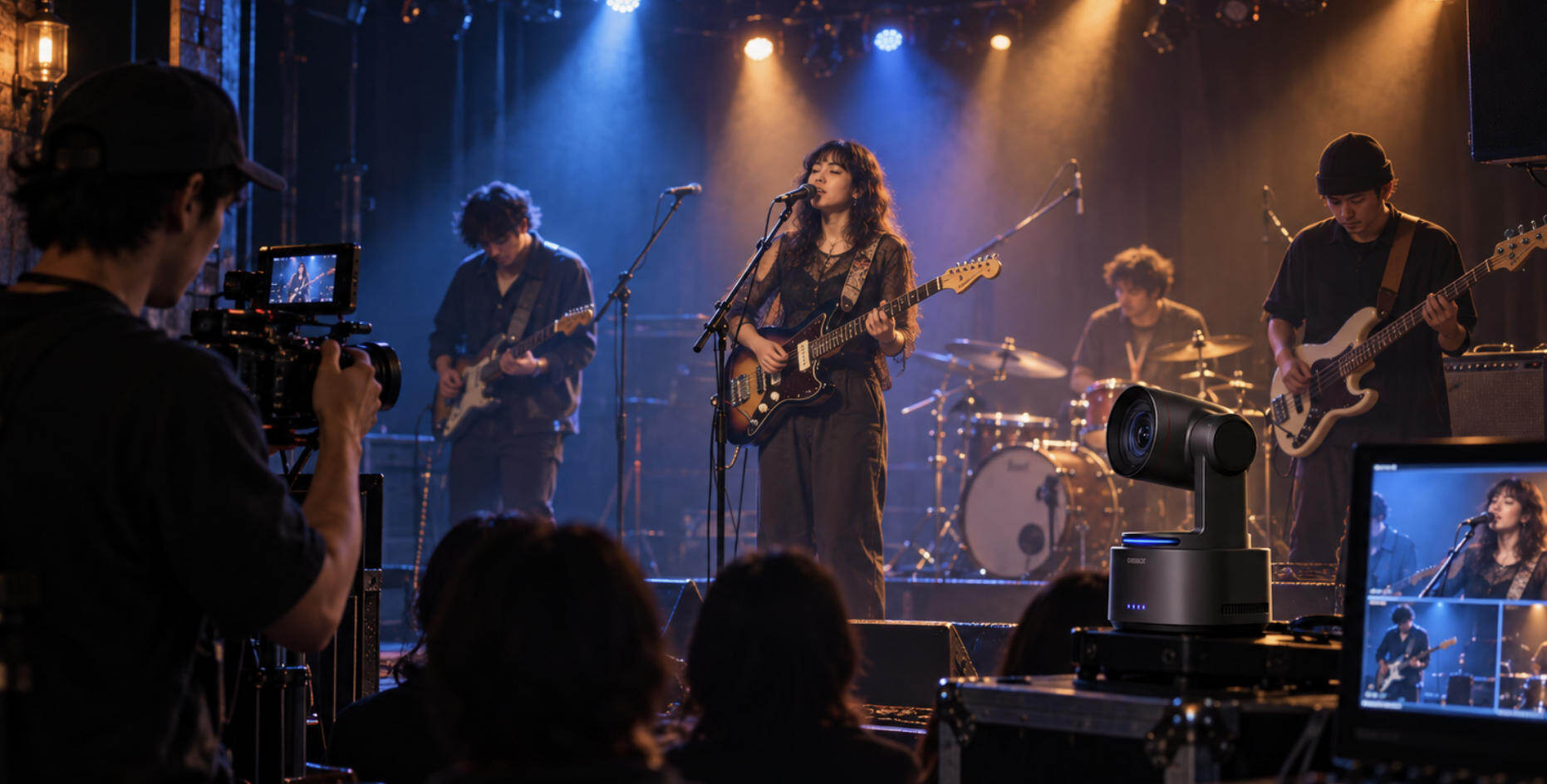
If you want a device that would help you amplify the streaming and recording with OBS, then the OBSBOT Tail 2 is perfect for you. Offering the highest quality with several AI features and a sturdy build, it offers content creators exactly what they need to create professional broadcasts.
- AI Tracking 2.0: Lock your face in the frame without needing to adjust, perfect for content creation or even thorough tutorial videos with no talking.
- 4K at 60fps and 1080p at 120fps: Make sure that most of your viewers get the feel of a clear picture on the video of your choice.
- Gesture Control 2.0: Changing camera modes, record start/stop, or zoom in or out are all executed by hand gestures and are ideal for use without one's hands.
- 12x Hybrid Zoom: A perfect Transitional tool with no loss in video quality and assures a clear focus on details during a Zoom-in.
- Versatile Connectivity: Can be connected with OBS through HDMI, USB-C, and Ethernet, which makes your streaming much easier.
- Low-Light Adaptability: Offers terrific illumination, which makes it quite appropriate for use with any form of content regardless of the lighting conditions.
Part 2: How Do I Separate Audio While Streaming With OBS?
It gives you more control over your content when you split audio sources in OBS, allowing you to record specific audio in OBS such as game sounds, music, or other desktop audio without capturing unwanted sources.
Why Separate the Audio Sources?
- To record or stream only certain audio tracks.
- For post-production audio mixer editing.
- To prevent private speaking from being sent over broadcast.
How Do You Separate the Audio Channels?
1. Set up Audio Tracks in OBS
- Go to Advanced Mode under Settings > Output.
- Activate a couple of audio tracks (like Track 1 and Track 2) in the Recording tab.

2. Assign Sources to Tracks
- In the Audio Mixer panel, click on the gear icon beside a source.
- Choose Advanced Audio Properties.
- Uncheck the tracks if you don't want the audio to play. For instance:
- Track 1 - Game sound
- Track 2: Music
- No microphone tracks.

3. Test Your Configuration
- Start a short recording to ensure every audio source has the correct routing.
- Play back the recording, ensuring the voice audio is off as you would like it to be.
You may keep your audio mix clear for recording and streaming by isolating your audio sources.
Part 3: How Do We Not Record Voice in OBS?
The following should help you record gameplay with no speech audio involved.
1. Turn off the microphone audio in the recording settings
- Access Settings > Output> Recording.
- Select a specific track for recording.
- Ensure the track selected does not have anything linked to the microphone.
2. Let the mixer's microphone be set to mute
- In the Audio Mixer panel, find the source of the microphone.
- Click the speaker icon to mute the microphone.

3. Use Push-to-Mute or Push-to-Talk
- For temporary exclusion, set up a Push-to-Mute hotkey in Settings > Hotkeys.
- When needed, assign your selection of a key combination and exclude the microphone.

4. Recheck the tracks of the audio
- Verify that only desktop audio or other sources are active.
- Start a quick test recording to ensure voice audio is not included.
- Ensuring only the desired audio sources are active helps maintain clarity, and adjusting other settings as explained in raise recording quality in OBS can further enhance your recordings.
FAQs About How to Stream and Record Without Voice Audio in OBS
1. How to record without audio on OBS?
It is possible to record without audio if you mute every audio source in OBS. You have to mute the mica/aux and desktop audio in the audio mixer before you start recording. It’s helpful for recording the screen, or if you have to add the audio later.
2. Can you use OBS to record sound only?
Yes, OBS can help record the sound by turning off the video sources. In addition, you can remove or hide the camera, along with other screen sources. However, you’ve to enable the audio tracks. It’s a good option for music recording and voiceovers.
3. How to not hear your voice in OBS?
You can stop hearing your voice by turning off audio monitoring. In Advanced Audio Settings, set your microphone’s monitoring to “Off.” This prevents echo while still recording your voice. Monitoring is only needed if you want to hear yourself live through headphones.
4. How to have OBS record audio and video separately?
OBS allows separate audio tracks. Assign different sources to different tracks in Advanced Audio Settings. This is helpful for editing voice, game sound, and music independently. Make sure your recording format supports multiple tracks, such as MKV or MP4.
5. How to record screen and internal audio with OBS?
OBS can record your screen and internal audio by enabling Desktop Audio. Select the correct system audio device in OBS settings. This works well for tutorials, gameplay, and demos. If audio doesn’t record, double-check your system sound output matches OBS settings.
6. Why is OBS screen capture no audio?
The most common reason is that Desktop Audio is disabled or set to the wrong device. OBS does not automatically capture system sound. Check Audio Settings and ensure Desktop Audio matches your speakers or headphones. Screen capture alone does not include audio by default.
7. How to make OBS not capture desktop audio?
You can stop OBS from capturing desktop audio by muting or disabling Desktop Audio. This is useful when you only want the microphone audio. You can also remove Desktop Audio completely in Settings. This helps avoid unwanted system sounds during recording.
8. How to use OBS to record gameplay and audio?
OBS is widely used for recording gameplay with audio. Add a Game Capture source and enable Desktop Audio for game sound. Add a microphone if you want voice commentary. Pairing OBS with a clear webcam like OBSBOT Tiny 2 can improve face-cam quality during gameplay recording.
Conclusion
OBS allows users to stream or record without voice audio, making it ideal for silent recordings and uninterrupted gaming broadcasts. These features position OBS as a groundbreaking tool for streaming and recording, especially when utilizing its voice-audio-free capabilities. By exploring the settings in OBS, you can learn how to stream and record without voice audio, manage separate audio sources, and enhance your setup with devices like the OBSBOT Tail 2, enabling you to create professional-grade streams and recordings tailored to your needs.